Reviewing the "Lol Sorry I’m Not" SVG for Real Embroidery Projects
As a designer who has spent countless hours digitizing and stitching everything from delicate baby onesies to heavy-duty workwear, I approach every new machine embroidery design with a mix of curiosity and skepticism. We have all seen the flood of digital assets online, but few hold up under the needle. Today, I am taking a close look at Funny Svg Design, Lol Sorry I’m Not. This isn’t just about whether the file opens correctly; it is about how this specific graphic translates into thread, how it behaves on different textiles, and whether it adds genuine value to a craft business or Etsy seller inventory.
First Impressions: Mood and Visual Personality
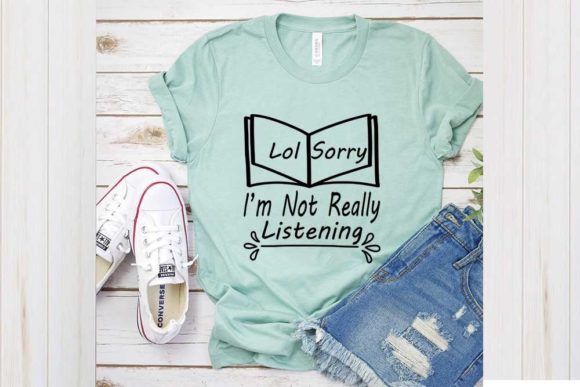
The first thing that strikes me about Funny Svg Design, Lol Sorry I’m Not is its attitude. The phrase "Lol Sorry I’m Not Really Listening" carries a playful, slightly rebellious tone that resonates well with current trends in casual apparel. Visually, the layout appears balanced, relying on typography to do the heavy lifting. For an embroidery project, text-based designs are tricky. They require precise kerning and stroke width to remain legible once stitched.
In my initial assessment, the design feels suited for modern, humorous T-Shirt Designs and casual home goods. It does not try to be overly ornate, which is a strength. Overly complex Graphics often fail in embroidery due to excessive stitch counts or tiny details that get lost. This design seems to embrace simplicity, which usually translates better to fabric. The mood is lighthearted, making it an excellent candidate for personalized gift items where the recipient appreciates wit over formal elegance.
Real-World Application: From Digital File to Finished Product
To truly evaluate an embroidery file, you have to imagine it in situ. I recently worked on a custom order for a boutique client who wanted a line of quirky tote bags for a local book fair. Funny Svg Design, Lol Sorry I’m Not would have been a perfect fit for that tote bag design concept. Imagine this stitched in a contrasting white or cream thread on a natural canvas bag. The humor catches the eye, and the simplicity ensures it doesn’t overwhelm the fabric’s texture.
Beyond totes, consider sweatshirt embroidery. A crewneck sweatshirt provides a stable, thick surface that handles text-based designs beautifully. The fill stitch areas in the letters would sit nicely on the fleece without sinking in, provided the correct stabilizer is used. This design could also work as a small chest logo on a custom apparel line for a coffee shop or a creative agency looking for internal merchandise. It serves as a conversation starter, which is exactly what many small business owners want for their small shop product offerings.
For those selling digital embroidery file packages, this type of design appeals to hobbyists who want quick, impactful projects. It is not just about the stitch; it is about the story the finished product tells. Whether it is a holiday embroidery gift for a sarcastic friend or a everyday accessory, the design’s versatility is its strongest asset.
Technical Considerations and Stitching Challenges
While the concept is strong, the execution requires attention to detail. Since the ZIP file contains EPS, SVG, PNG, and DXF files, we must remember that these are primarily vector graphics formats. For machine embroidery, these usually need to be digitized into a proper stitch file (like PES or DST) unless you are using a software that converts them on the fly. If you are working with pre-digitized versions, check the stitch density carefully.
Text designs often suffer from two main issues: thread breaks and readability. If the running stitch outlines are too thin, they may disappear on textured fabrics. Conversely, if the satin stitch columns are too wide, they can snag or pull the fabric. When using Funny Svg Design, Lol Sorry I’m Not on stretchy materials like jersey knits for t-shirts, a cut-away stabilizer is non-negotiable. Without it, the tension from the stitches will cause the fabric to pucker around the letters, ruining the clean look of the handmade product.
Another critical factor is hoop size. Ensure the design fits comfortably within your hoop without being too close to the edge. If you are attempting this on a curved surface like a cap, the distortion can warp the text. I recommend testing the design on a scrap piece of similar fabric first. Check how the thread colors interact with the background. High contrast is key for readability. A dark thread on a dark fabric will render the joke invisible, defeating the purpose of the design.
Navigating Fabric Types and Limitations
Not every fabric is a good candidate for this specific design. Thin, silky fabrics may not support the weight of the stitches, leading to gathering or tearing. In such cases, considering an applique design approach might be better, where the text is cut from fabric and stitched down, reducing the bulk of the thread. However, for standard cottons, linens, and heavier blends, this design should perform well.
Be cautious with baby embroidery projects. While the humor might appeal to parents, ensure the stitching is secure and soft against sensitive skin. Avoid placing large, dense stitch areas directly where they might rub against a baby’s neck or arms. For embroidered patch creations, this design would excel. Patches allow you to control the backing and stabilizer completely, ensuring a professional finish that can be ironed or sewn onto various garments later.
Enhancing Brand Value and Customer Engagement
From a business perspective, using witty, relatable designs like Funny Svg Design, Lol Sorry I’m Not can significantly boost customer engagement. It humanizes your brand. When an Etsy seller offers products that reflect personality, buyers feel a stronger connection. This design fits seamlessly into a lineup of design assets aimed at millennials and Gen Z consumers who value authenticity and humor.
When creating printable mockup images for your online store, show the design in context. Display it on a cozy pillow cover, a sturdy apron, or a trendy cap. This helps customers visualize the commercial embroidery quality and the scale of the design. It builds trust because it shows you have thought about the final application, not just the digital file.
Practical Designer Notes for Best Results
- Test Before Selling: Always stitch out a sample on your intended fabric. Check for thread breaks and alignment.
- Contrast is King: Choose thread colors that stand out against the fabric. Use a color wheel to find complementary shades.
- Stabilizer Selection: Use tear-away for stable woven fabrics and cut-away for knits and stretchy materials.
- Check Licensing: Before using Funny Svg Design, Lol Sorry I’m Not in commercial embroidery projects, confirm the license terms included with the download. Ensure you have the right to sell finished items.
- Inspect Details: Zoom in on the digital file to check for any overlapping nodes or unnecessary anchor points that could cause stitching errors.
- Versatility Check: Consider how the design looks in monochrome. If it works in black and white, it will likely work in any color combination.
In conclusion, Funny Svg Design, Lol Sorry I’m Not is a promising addition to any designer’s library. It offers a blend of humor and simplicity that translates well to various embroidery project types. By paying attention to technical details like stabilizer choice, thread tension, and fabric compatibility, you can turn this digital graphic into a high-quality, sought-after handmade product. Whether you are decorating T-Shirt Designs for a local event or creating unique Graphics for your online store, this design has the potential to resonate with customers who appreciate a good laugh and quality craftsmanship.